
Ritournelle teas
You will find our range split into several categories:
Classic teas, unflavoured single-origin or infused with spices or flowers, premium single-origin teas, or our signature house blends.
We source our teas as directly as possible from producers, aiming to build lasting, long-term relationships.
The botanicals used in our blends and scented teas are predominantly sourced in France, from cooperatives working directly with producers.
Showing all 11 results
-
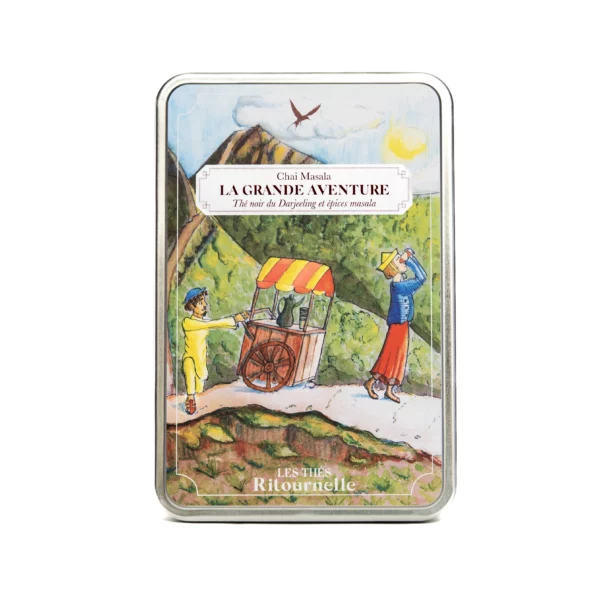
The great adventure
Price range: 14,50 € through 16,80 € -
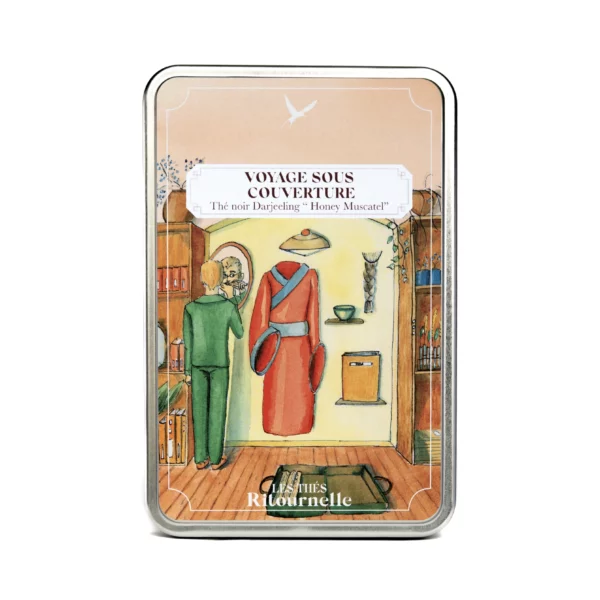
A journey under covers
Price range: 13,80 € through 15,50 € -
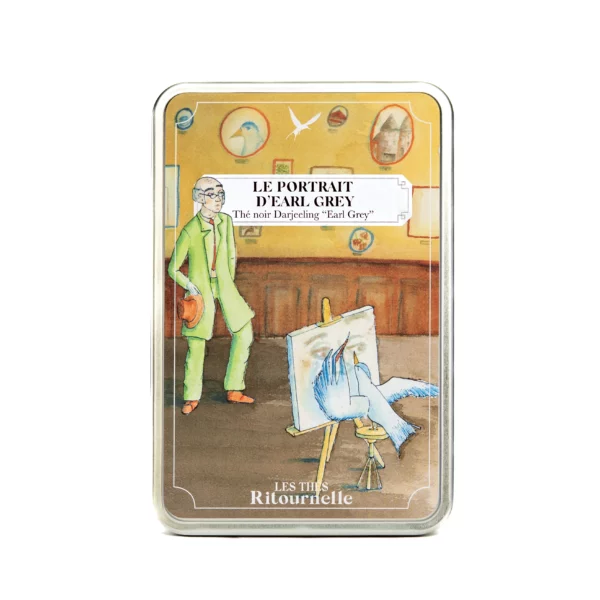
The picture of Earl Grey
Price range: 13,50 € through 15,50 € -
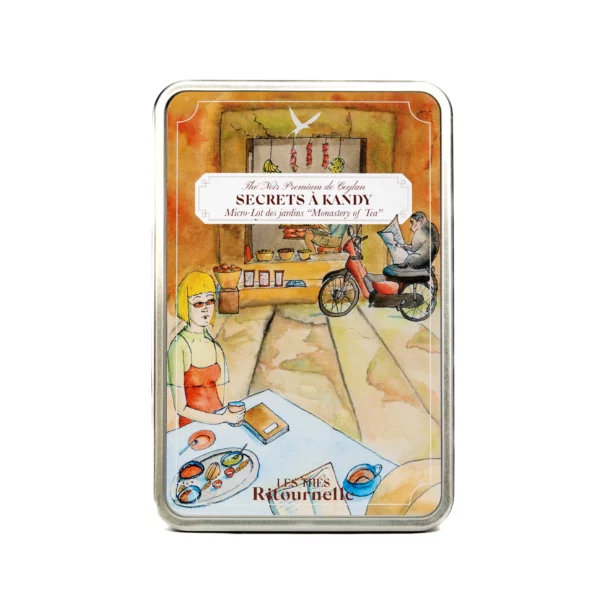
Secrets of Kandy
Price range: 19,00 € through 28,00 € -
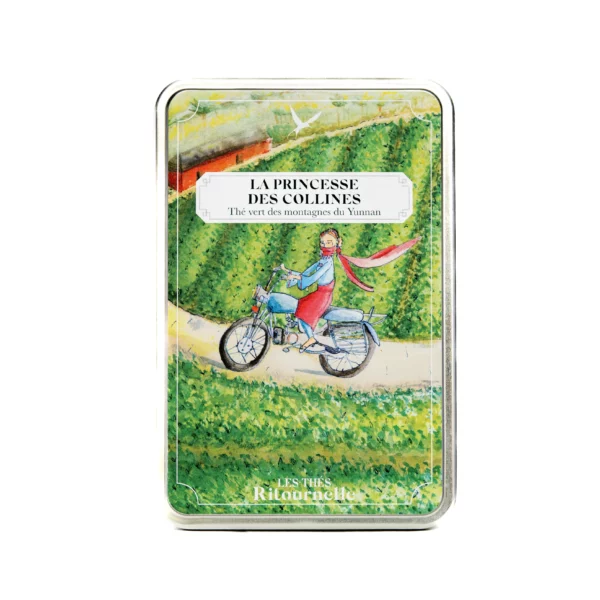
The princess of the hills
Price range: 11,00 € through 13,00 € -
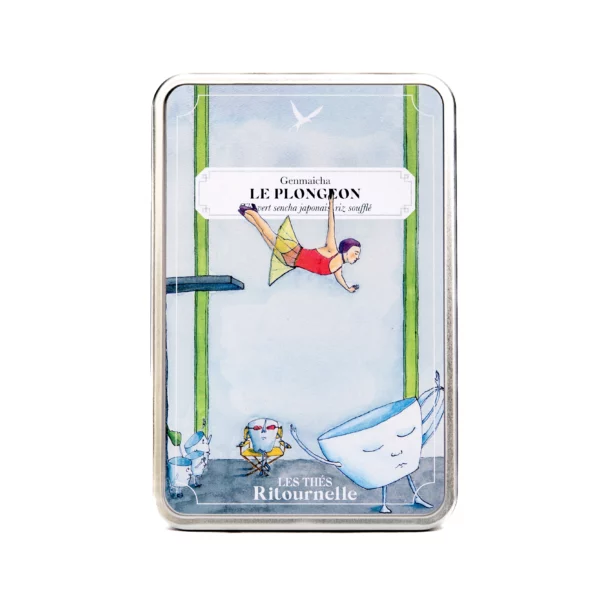
The dive
Price range: 14,80 € through 16,50 € -
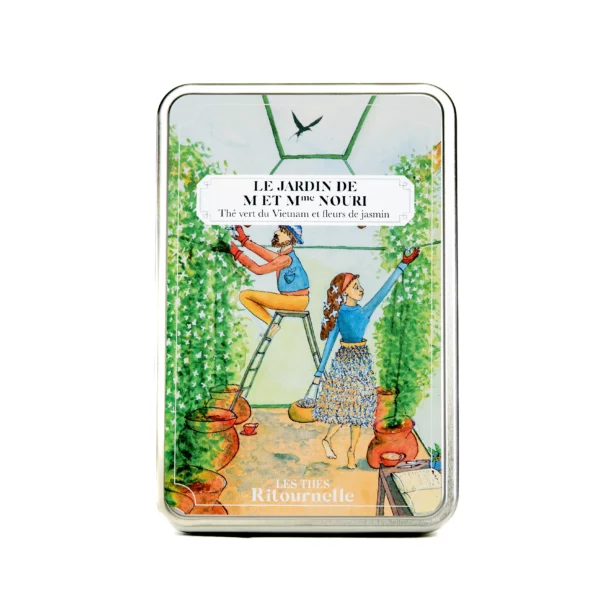
Mr and Mrs Noury's garden
12,80 € -
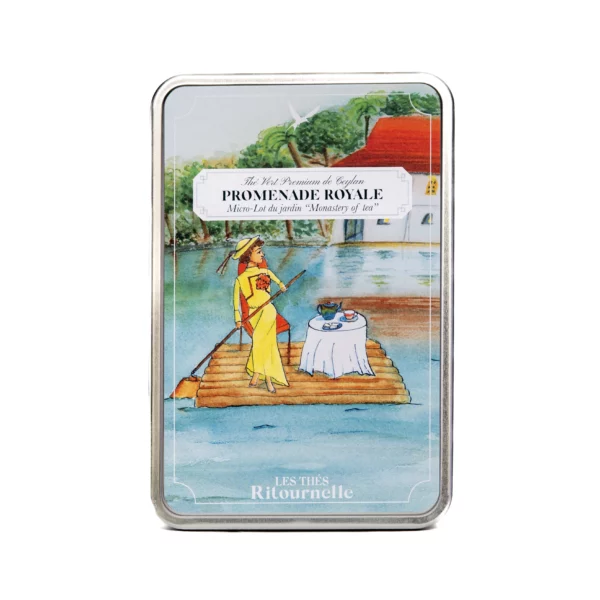
Royal walk
Price range: 19,00 € through 28,00 € -
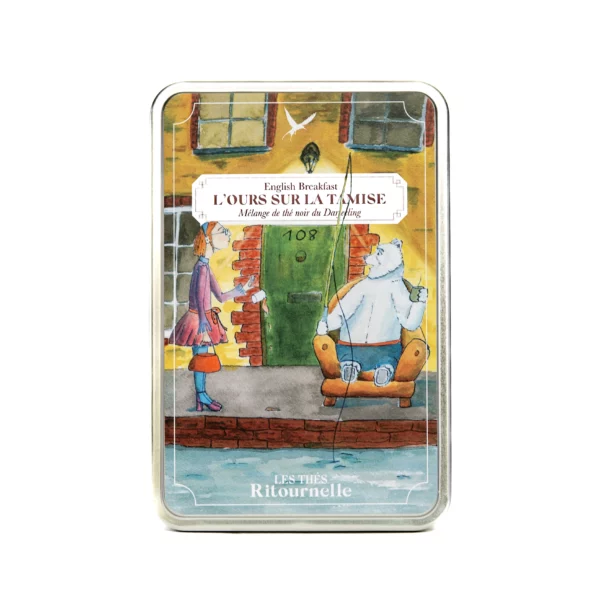
The bear on the Thames
Price range: 12,00 € through 13,80 € -
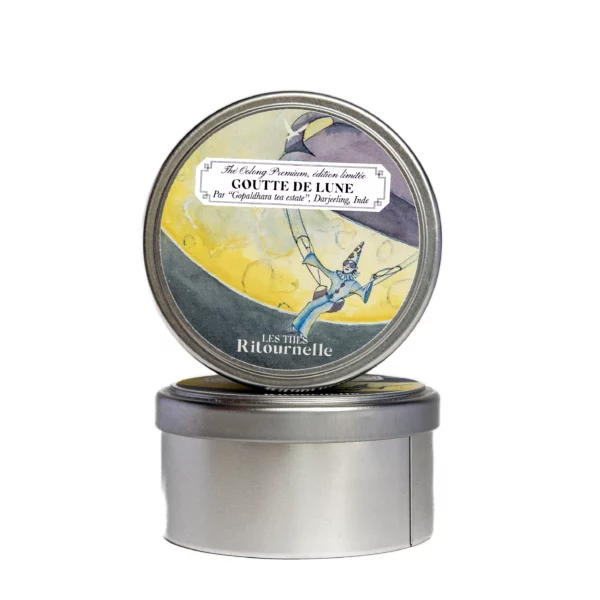
Moondrop
17,50 € -
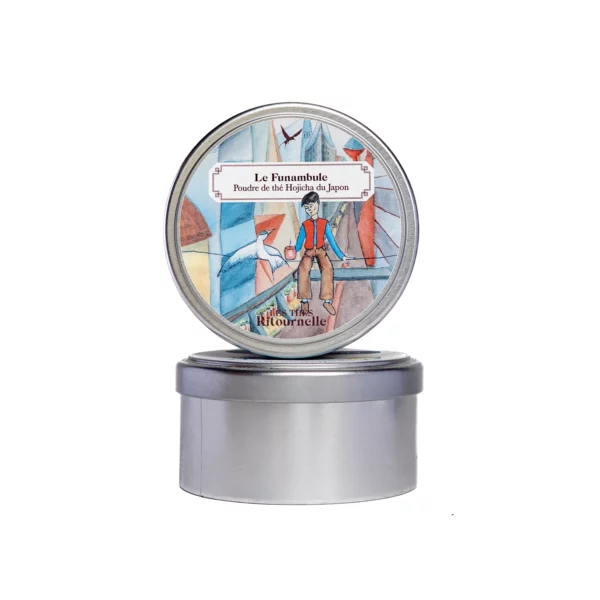
The tightrope walker
14,50 €
Uncertain about preparation, origin or tea rituals? Discover our expert advice to fully appreciate the richness of our grand cru and single-origin teas.
What is tea?
Tea is a beverage made from infusing the leaves of a single botanical shrub: Camellia sinensis.
Unlike herbal infusions or tisanes crafted from other plants or culinary herbs, true tea comes exclusively from the leaves, buds, and young shoots of the tea plant (Camellia sinensis).
Whether white, green, oolong, black, or dark, all teas originate from this very same plant native to Asia. What creates this infinite palette of colours, aromas, and textures is the expertise of the producer: the way the leaf is harvested, dried, rolled, or oxidized.
Cultivated according to its terroir (altitude, soil, climate), tea is at once a thousand-year-old ritual, an art of living, and the second most consumed beverage in the world after water.
What is a single-origin or terroir tea?
A pure tea from a single garden or estate, capturing the unique identity of its terroir.
Unlike industrial blends made from teas sourced across multiple regions, a terroir tea comes from a single estate. Climate, altitude, soil composition, and the tea master's craftsmanship express themselves freely, offering an irreplaceable, living flavor profile of great aromatic complexity.
How to choose a tea according to the time of day?
All teas come from the same plant (Camellia sinensis); it is the degree of oxidation that determines their colour and aromas.
White Tea: The least processed, simply air-dried. Subtle, floral, and of great delicacy.
Green Tea: briefly heated (steamed or wok-fired) to stop oxidation. Vegetal, fresh, and rich in antioxidants.
Align your tea profile with your needs for energy and comfort.
In the morning: Choose a high-altitude Black Tea (Darjeeling, Assam, Ceylon) for a stimulating, fresh, or robust awakening.
Afternoon: opt for the delicacy of a Japanese Green Tea or a floral Oolong to accompany your creative breaks.
End of day: Turn to a White Tea, a Hojicha, or a naturally caffeine-free botanical infusion for a moment of pure relaxation.
What is the golden rule for brewing the perfect cup of tea?
The golden trilogy: leaf-to-water ratio, water temperature, and steeping time.
Temperature : never pour boiling water (100C) over a green or white tea, as you risk scorching the leaves. Aim for 70 to 80C for green tea, 80 to 85C for white tea and oolong, and 90 to 95C for black tea.
Time : a green tea requires 2 to 3 minutes, while a black tea expresses its full character in 3 to 5 minutes.
dosage: Allow around 2 to 2.5 g of tea leaves (one teaspoon) for 200 ml of water.
Can tea leaves be steeped multiple times?
Yes, high-quality loose-leaf teas are crafted to offer multiple successive infusions.
Artisanal whole-leaf teas (particularly oolongs, white teas, and fine single-origin green teas) reveal different aromatic notes with each infusion. You can re-steep them 2 to 5 times over the course of the same day by slightly increasing the steeping time with each successive brew.
How to properly store loose-leaf tea to preserve its aromas?
Keep it away from its four enemies: light, air, moisture, and unwanted odours.
Store your tea leaves in an airtight, opaque metal tin or a sealed aluminium zip pouch, kept in a cool, dry place. Avoid storing them near spices or coffee, as tea very easily absorbs surrounding odours.
Is it good to drink tea every day?
Yes, consumed in moderation (3 to 4 cups a day), tea is a true daily health ally.
Thanks to its natural wealth in antioxidants (polyphenols and catechins), tea helps protect cells against oxidative stress, promotes cardiovascular health, and stimulates mental clarity without the jitters of coffee. To reap all its benefits, opt for high-quality pure teas and adjust your consumption according to your sensitivity to caffeine.