
Powdered Teas & Matcha
These Japanese specialities offer a unique tasting experience. From the fresh umami notes of ground tea to the warm, comforting roundness and nutty flavours of hojicha, discover the art of tea at its most soothing.
Showing the single result
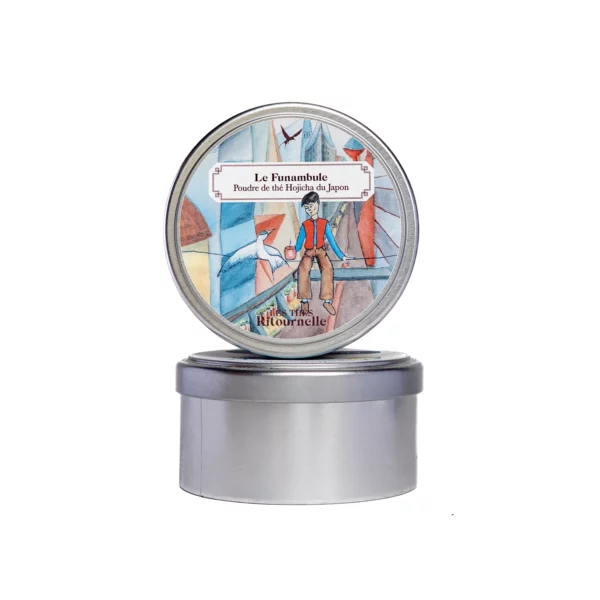
Discover Hojicha, this surprising ancestral beverage with indulgent notes
What is the difference between powdered tea and loose-leaf tea?
Loose-leaf tea is infused; powdered tea is whisked in and enjoyed in its entirety.
During a traditional infusion, water extracts only a fraction of the leaf's flavours and benefits. By enjoying powdered tea, you consume the plant itself, milled to an absolute fineness. The result is a flavour profile of unparalleled intensity, a velvety texture, and a maximum intake of antioxidants, vitamins, and amino acids.
What is the difference between Matcha and powdered Hojicha?
The roasting stage changes everything.
While Matcha offers the vibrant, vegetal and stimulating freshness of shaded green tea, Hojicha powder features a brown hue with roasted, comforting accents. Furthermore, the intense heat of roasting destroys almost all the caffeine in Hojicha, making it a remarkably smooth drink.
What is Hojicha and what is its flavour profile?
A roasted Japanese green tea with a woody, indulgent profile.
Hojicha is obtained by roasting green tea leaves at high temperature in porcelain pots. This artisanal process radically transforms the leaf: its colour becomes amber and its profile reveals warm notes of roasted hazelnut, caramel, cocoa and gentle woodiness. On the palate, the drink is entirely free of bitterness.
How was Hojicha tea born?
Born in Kyoto in the 1920s through artisanal ingenuity to avoid wasting harvests.
The history of Hojicha dates back to the early 20th century in Kyoto. A local tea merchant, looking for a solution not to throw away the green tea stems, twigs and leaves left over from preparing grand crus, decided to roast them over charcoal (binchotan). The result was a revelation: under the effect of intense heat, the bitterness vanished to make way for enchanting notes of hazelnut, caramel and grilled wood. This comforting, accessible tea immediately conquered Japan and became a staple in Japanese homes.
Can Hojicha be consumed in the evening?
Yes, it is the ideal infusion for the evening.
As roasting neutralises the majority of alkaloids, Hojicha displays an extremely low caffeine level. It is the perfect tea to accompany the end of the day, unwind after dinner or offer a healthy, warm drink to people sensitive to stimulants.
How to ensure that your Hojicha tea is authentic and of high quality?
Guaranteed origin from Japan, the artisanal roasting method and the purity of flavours without additives.
To recognise an authentic speciality Hojicha, rely on three fundamental criteria:
Certified origin: authentic Hojicha comes exclusively from Japan (notably historical regions such as Kyoto/Uji, Shizuoka or Kagoshima).
Composition (100% pure): A genuine Hojicha contains no added flavourings, colourings or sugar. Its caramel and hazelnut notes result solely from the natural caramelisation of the leaf's sugars during roasting.
Roasting precision: the powder or leaves must feature a fine, uniform amber or cocoa colour, releasing a warm, toasted and enveloping aroma upon opening the container, without ever smelling burnt.
Why use a bamboo whisk (Chasen) rather than a traditional kitchen whisk?
Its fineness and high number of prongs are designed to aerate the tea without altering its taste.
Hand-carved from a single piece of bamboo, the Chasen features between 80 and 120 ultra-fine, curved prongs. This unique structure captures air to create a fine, homogeneous emulsion and a microscopic foam (crema) impossible to achieve with a metal whisk. Moreover, bamboo is a neutral material that transfers no metallic taste and does not damage the ceramic of your bowl (Chawan).