
Oolong teas
Halfway between the freshness of green tea and the depth of black tea, oolong teas—or blue-green teas—unveil an exceptionally rich aromatic palette. Lightly floral or generously roasted, these fine semi-oxidised grand crus are best appreciated through successive infusions for a sensory tasting experience of great refinement.
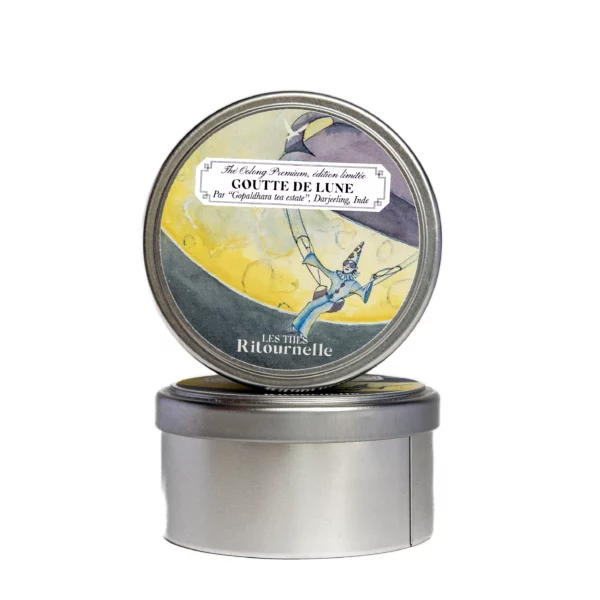
Showing the single result
From light floral notes to woody and roasted aromas, find all the essentials for choosing and successfully brewing your oolongs.
What is Oolong tea (or blue-green tea)?
A semi-oxidised tea situated halfway between the freshness of a green tea and the roundness of a black tea.
Also known as Wulong (meaning "Black Dragon" in Chinese) or blue-green tea, Oolong tea is an exceptional family. Made from Camellia sinensis, it undergoes partial oxidation (from 10% to 80%) mastered to perfection by the tea master. This category offers one of the broadest aromatic palettes in the tea world, ranging from very fresh vegetal and floral notes to woody, fruity or honeyed nuances.
What are the differences between a lightly oxidised Oolong and a heavily oxidised Oolong?
The degree of oxidation completely transforms the liquor's colour and aromatic profile.
Light Oolong (light oxidation, 10% to 30%): Lowly oxidised, its leaves are often rolled into small pearls. The liquor is pale, revealing very fresh, vegetal, floral (jasmine, orchid) and sometimes milky notes (Milky Oolong).
Dark Oolong (heavy oxidation, 50% to 80%): More oxidised and sometimes roasted, its leaves are often twisted. The liquor takes on an amber hue and develops warm aromas of tree nuts, ripe fruits, cocoa or precious woods.
Where do the best Oolong teas come from?
The historical terroirs of Taiwan and Fujian province in China.
Taiwan (Formosa): Renowned for its high-altitude Oolongs (High Mountain Oolongs or Gaoshan) grown in the mist (e.g. Ali Shan, Lishan), prized for their purity, natural sweetness and floral profile.
Fujian (China): The historical birthplace of Oolong. Here you will find the famous Rock Teas (Yancha) of Mount Wuyi with mineral and roasted notes (such as Da Hong Pao), as well as the legendary Tie Guan Yin (Goddess of Mercy) from Anxi County.
What is Milky Oolong tea and where does its creamy taste come from?
A natural Taiwanese cultivar (Jin Xuan) that spontaneously develops creamy and vanilla notes.
Genuine artisanal Milky Oolong comes from the Taiwanese cultivar Jin Xuan (Taiwan Tea Experiment Station No. 12). Grown at high altitudes and subjected to mild thermal shocks, this tea naturally develops enchanting aromas of warm milk, fresh butter and vanilla during oxidation, without any added artificial flavourings or dairy products.
Which foods pair best with Oolong tea during a tasting session?
Thanks to its vast aromatic diversity, Oolong is the ideal tea for food and tea pairings.
-
Light and floral Oolongs: Their vegetal freshness and orchid notes pair wonderfully with steamed fish, dim sum, fresh goat's cheeses or light white-fruit desserts (peach, pear).
-
Dark and roasted Oolongs: Dark and roasted Oolongs: Their woody and nutty notes enhance roasted meats, Asian dishes served with rich sauces, mature cheeses (such as aged Comté) as well as dark chocolate, caramel or praline desserts.
Does Oolong tea improve with age like fine wine?
Yes, certain roasted or high-mountain Oolongs develop great complexity as they age (ged Oolong).
While very light and floral Oolongs are best enjoyed within their harvest year to preserve freshness, medium or heavily roasted Oolongs lend themselves remarkably well to ageing. Stored in terracotta jars and regularly re-roasted over the years by the tea master, they lose their initial heat to gain depth, developing notes of prune, leather, amber honey and an extraordinarily velvety texture.
What type of teapot should be used to reveal all the subtlety of an Oolong?
A small unglazed terracotta teapot (Yixing) or a Gaiwan porcelain
-
Porcelain (Gaiwan) Neutral and smooth, porcelain does not retain aromas. It is ideal for appreciating the purity of aromas in light and floral Oolongs.
-
Yixing terracotta (memory clay) Thanks to its natural porosity, terracotta absorbs the tea's essential oils over successive infusions and yields a rounder, warmer and more harmonious liquor. It is the vessel of choice for great roasted or rock Oolongs. Be the first to know Your content goes here. Edit or delete this text online or in settings